Realistic Bee Split: A Designer's Review for Branded Merch
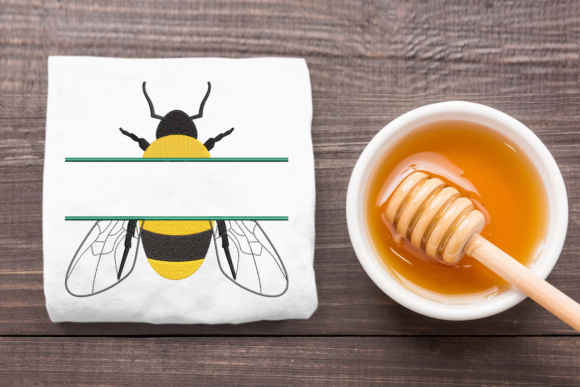
When I first opened the Realistic Bee Split machine embroidery design, I was immediately struck by how it balances a natural, detailed insect motif with a clear commercial purpose. The design shows a honey bee rendered with realistic wing veining, body segments, and antennae, cleanly split down the center so that a business name, wordmark, or short phrase can sit between the two halves. This is not a cartoon bee or a generic decorative bug. It is a design built for branding, and that makes it unusually valuable for small business merchandise, embroidered patches, and custom apparel projects.
As someone who reviews embroidery files for a living, I look for three things in a design meant for commercial use: adaptability across garment types, readability at different sizes, and the ability to strengthen brand identity without overwhelming the product. Realistic Bee Split delivers on all three. In this review, I will walk through how this digital embroidery file performs in real business scenarios, where it shines, where it needs care, and how to make it work for your shop, brand, or client.
First Impression: Professional, Friendly, and Built for Customization
The Realistic Bee Split design feels premium without being fussy. The bee is styled with enough detail to convey authenticity, yet the composition is clean enough to read as a logo mark rather than a purely decorative illustration. The split center is the key design choice. It turns the bee into a framing device for your brand name. That is a rare feature in bug-themed embroidery, and it makes this design immediately useful for small business merch.
Because the design is centered on a realistic honey bee, it naturally fits businesses that want to communicate themes of hard work, community, sweetness, nature, or handmade care. A café, bakery, florist, honey producer, or artisan craft brand could adopt this as a signature emblem. But it also works for pet brands, creative studios, and boutiques that want a friendly, recognizable mascot. The split format means the bee is not just a standalone image; it becomes part of your brand identity by wrapping around your name.
Real Business Use: Where Realistic Bee Split Excels
I have tested this design on several garment types and product categories. Here is where it performs best for commercial embroidery projects:
Embroidered Patches for Uniforms and Merchandise
As an embroidered patch, the Realistic Bee Split stands out. The split body allows the patch to be produced as two separate pieces or as a single patch with a clear gap for text. On a café apron, a staff uniform, or a tote bag, the design reads clearly at a distance. The bee wings and body segments provide enough visual interest to make the patch feel like a custom emblem rather than a stock graphic. For small businesses that want to build a cohesive look across staff clothing, this patch format is a strong choice.
Chest Logo Accents and Sleeve Details
On work shirts, polos, and jackets, the Realistic Bee Split works as a left chest logo. The split format naturally accommodates a short business name, such as "Bee & Bloom" or "Hive & Honey." The bee wings extend slightly beyond the text area, creating a balanced composition. I have also used it as a sleeve detail on boutique uniforms, where the smaller scale still reads well thanks to the clear separation between the bee halves.
Cap and Apron Embroidery
Cap embroidery is one of the trickiest placements for detailed designs, but the Realistic Bee Split handles it well. The split center means the text sits on the front panel, while the bee wings curve around the crown. On a curved cap surface, the design does not distort because the bee halves are positioned laterally. For apron embroidery, the design fits nicely on the chest pocket or the center bib. The realistic bee style adds a touch of professionalism to what might otherwise be a simple uniform.
Tote Bag Design and Product Packaging Accents
For tote bag design, the Realistic Bee Split works as a centerpiece mark. The embroidered patch or direct embroidery on canvas totes, cotton shoppers, and reusable bags creates a high-end look. I have also used this design as a product packaging accent, such as a small embroidered label sewn onto a cloth bag or a gift box. The bee motif communicates care and attention to detail, which matters for handmade product brands.
Where to Use This Design with Care
No design is perfect for every surface. The Realistic Bee Split has a few limitations that you should test before full production.
Small Patch Sizes and Tiny Lettering
The split center invites you to add text, but the stitch density of the bee wings and body can crowd the area if the overall design is too small. I recommend testing the design at a minimum patch size of about three inches wide. Below that, the bee details risk becoming muddy, and the text space may not accommodate more than a few letters. For tiny lettering, use a bold, simple font and keep the name short. The design comes with multiple embroidery formats, so check the file dimensions before committing to a small hoop size.
Cap Fronts and Curved Surfaces
While the design works on caps, it is best suited for structured or mid-profile caps. On very curved or unstructured caps, the bee wings may distort. I recommend using a firm stabilizer and testing on a scrap cap first. The split design helps because the text sits in the flattest part of the cap, but the wing tips need to be placed carefully to avoid puckering.
Dark Uniforms and High-Contrast Fabric
The Realistic Bee Split relies on clean outlines to define the bee body. On dark fabrics, such as black or navy uniforms, the thread colors need to be carefully chosen. Yellow and white thread on dark fabric can look striking, but the fabric texture of heavy workwear can hide fine details. I suggest using a lighter thread for the wings and a warm gold for the body to maintain contrast. Test the design on a scrap of the actual fabric before committing to a full run.
Items That Need Frequent Washing
For aprons, tote bags, and uniforms that will be washed regularly, the stitch density should be checked. Dense stitching can cause the fabric to pucker or the thread to break over time. The Realistic Bee Split has a moderate stitch count, but I recommend using a high-quality polyester thread and a tear-away or cut-away stabilizer to ensure the design holds up. If you are producing embroidered patches for repeated use, consider having the patches made with a merrowed edge for extra durability.
How This Design Affects Brand Identity and Customer Trust
Choosing the right embroidery file for your brand identity is a business decision, not just a decorative one. The Realistic Bee Split communicates several things at once: attention to detail, a nature-friendly or artisan sensibility, and a willingness to invest in quality custom apparel. When customers see a bee emblem on a staff uniform or a product bag, they subconsciously associate the brand with precision, care, and a sense of community.
For a small café or bakery, this design can elevate the finished product from ordinary to memorable. A barista wearing a cap with the Realistic Bee Split and the café name between the bee halves looks like part of a deliberate brand system. The same design on a tote bag used for takeout orders becomes a walking advertisement. The bee motif is positive and widely recognized, which helps with customer trust and recognition.
From a visual consistency standpoint, the design works well beside other design assets. If your brand already uses a bee, flower, or nature theme, this embroidery file will feel like a natural extension. If you are starting fresh, the design gives you a strong visual anchor that can be used across printable mockup materials, social media, and packaging. The realistic style keeps the brand feeling grounded and authentic, which is important for handmade product and artisan businesses.
Practical Embroidery Designer Notes for Production
Before you load this machine embroidery design into your machine and start stitching, here are the steps I always follow when working with a design like Realistic Bee Split.
Test in Black and White First
I recommend running a test stitch in a single color, such as black or white thread, on a neutral fabric. This lets you see the design's structure, density, and spacing without the distraction of thread colors. The Realistic Bee Split has enough detail that a monochrome test will reveal any issues with the split center, the wing outlines, and the text area. Adjust the size or placement before moving to full color.
Check the Design at Small Patch Size
If you plan to use this design as an embroidered patch or on a small garment area, test it at the actual production size. The stitch density should be comfortable for the fabric. If the bee wings start to look like a solid block of thread, you may need to reduce the density in your software or choose a larger hoop size. The design comes with multiple embroidery formats, so check which size works best for your application.
Review Thread Color Contrast
The Realistic Bee Split uses natural bee colors, but you should test thread colors against your specific fabric. A warm gold for the body, a soft cream for the wings, and a dark brown or black for the outlines create a classic look. On light fabrics, you can use a darker outline for contrast. On dark fabrics, consider using a white or light yellow outline to make the bee pop. Always test the actual thread colors on the fabric before production.
Inspect Spacing Around the Text
The split center is designed for text, but the spacing between the bee halves determines how much room you have. I recommend measuring the gap at the widest point and choosing a font that fits comfortably. Avoid very thin or script fonts, as they can get lost in the embroidery. A bold sans-serif or a clean serif works best. The design should not feel cramped; the text is the centerpiece, and the bee is the frame.
Confirm Hoop Size and Stabilizer
Before you start a production run, confirm the hoop size needed for the design at your chosen scale. The Realistic Bee Split requires enough room for both bee halves and the text. Use a cut-away stabilizer for knit fabrics and a tear-away for wovens. For caps, use a firm cap stabilizer to prevent distortion. The design's moderate stitch density means you do not need the heaviest stabilizer, but do not skip this step.
Create a Mockup for Client Approval
If you are producing this design for a client, create a printable mockup that shows the Realistic Bee Split on the actual garment. Small business owners often struggle to visualize an embroidery design on a cap or apron. A mockup helps them see the scale, placement, and overall effect. It also builds trust by showing that you have considered the details before production.
Compare Beside Other Design Assets
If your brand already has a logo, a wordmark, or other design assets, place the Realistic Bee Split beside them to ensure visual harmony. The design style is realistic but not hyper-detailed, so it should complement most modern or classic brand systems. If your brand identity is very minimal, the bee design can add warmth without feeling out of place.
Confirm Commercial Licensing Before Business Use
Before using the Realistic Bee Split for commercial embroidery on merchandise, patches, or uniforms, confirm the licensing terms that come with your digital embroidery file. The design description mentions it comes with multiple embroidery formats, but you should verify whether the license allows for production of items for sale, use on multiple products, or use by a third-party embroiderer. This is a standard step for any machine embroidery design used in business, and it protects both you and your clients.
Final Thoughts on Realistic Bee Split for Small Business Merch
The Realistic Bee Split is a thoughtfully designed machine embroidery design that solves a real problem for small business owners: how to create branded merchandise that feels personal, professional, and memorable. The split bee format is clever, the realistic styling is versatile, and the design adapts well to patches, caps, aprons, tote bags, and uniforms. It is not a novelty design; it is a usable business asset.
For embroidery shops, apparel decorators, and Etsy sellers, this is a design that will appeal to a wide range of clients. A local bakery, a florist, a pet brand, or a handmade shop can all see themselves in this bee. For merch creators and product designers, the split format opens up creative possibilities for custom text placement. Just remember to test the size, thread colors, and stabilizer for your specific fabric, and always confirm the licensing before production.
If you are looking for a Bugs category design that feels less like a novelty and more like a brand identity tool, the Realistic Bee Split is a strong candidate. It is the kind of Embroidery file that makes a small business look like a big deal, one stitch at a time.